

How to sell virtual patrolling to your clients
 By Muhammad Talha · Product Manager and CTONine years building computer vision and automated surveillance systems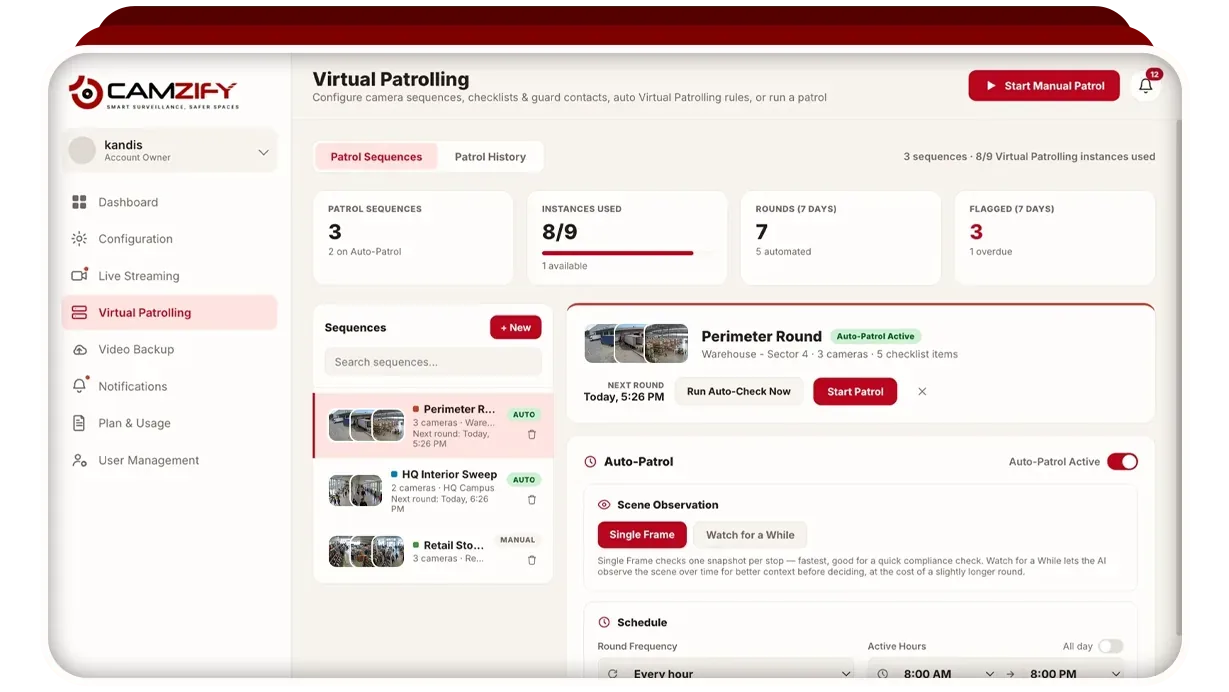
Nobody who buys guarding has asked for virtual patrolling by name. They have asked, in other words, for the hours they cannot afford, the overnight checks nobody makes, and something to show the insurer. This guide is the conversation, in the order it tends to go, for an owner who sells guard hours and mobile patrols today and wants to add a monthly service without losing the contract they have.
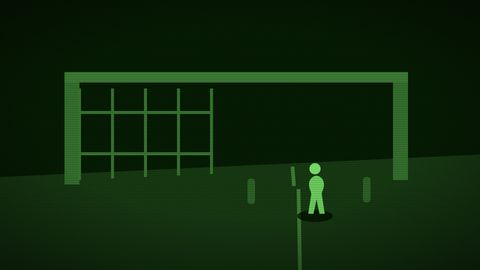
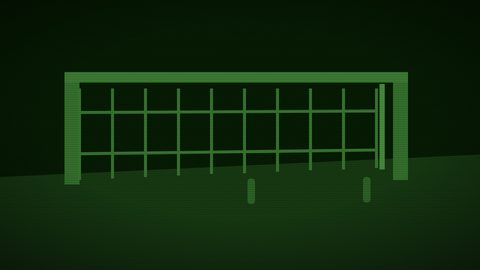
Guard message sent. Re-checked and closed with the second frame attached.
Start from what they buy now, not from the software
The client buys visits and hours. Open with the gap in both: the eleven sites the driver did not stop at tonight, the hours between the 23:00 and 03:00 visits, the checks that happen only when someone remembers. A camera round is the answer to the gap, and it is easier to sell as coverage between visits than as a product with a name.
Do not lead with detections, models or a console. Lead with a checklist: at each camera, is the door closed, is the yard empty, is the dock down. The client recognizes those questions because they are the ones they ask you. The virtual patrolling overview is where you send them afterwards, not where you start.
Show one round, on their cameras if you can
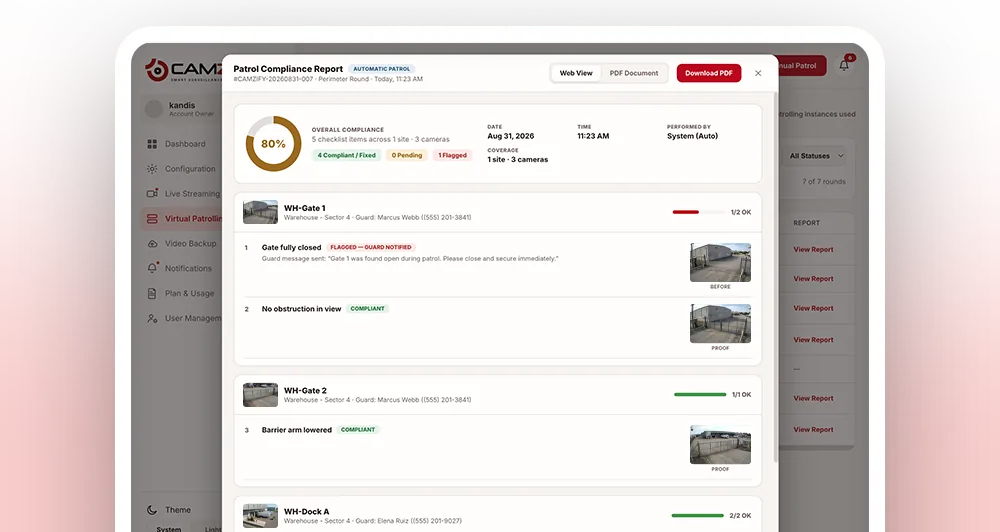
A round is a sequence of camera stops with a checklist at each, run on a schedule, with a report at the end. The how it works page walks through it, and the interactive demonstration on the virtual patrolling page runs a manual round end to end in about twenty seconds, including the guard message and the before-and-after report. Run it in the meeting. It does more than any slide.
If the client has cameras you can reach, book a demo and we will run a live round on them. A report with the client's own dock door in it settles the question of whether the thing is real.
Sell the report, because the report is the product
A visit log says a driver attended. A round report shows every camera stop, every checklist result, the frame it was judged against, the before-and-after pair for anything fixed, a timestamp and a compliance percentage. Clients with an insurer, a landlord or a head office to answer to see the difference immediately, and it is the part they cannot get from anyone who does not run rounds.
Show a sample report before you show a price. The client who has seen the report is negotiating for it; the client who has not is negotiating against a line item.
Keep the guards in the contract
The round does not attend. It finds the dock door up and messages your guard with the frame; someone still drives out. Say so plainly, because the client will ask, and because it is the reason the guarding contract stays. The mobile patrols comparison is written to be shown to a client for exactly this point.
The shape that sells is rounds on the cameras all night, the driver dispatched to what fails, and a report per round. Coverage and response, priced separately, on one invoice.
Price it per site per month, at your rate
Camzify is priced per instance per month and quoted for the portfolio you would cover; your proposal should carry your price rather than repeat ours. You set the price per client site per month against the quote. The agency mode of the ROI calculator takes your client count, your price and the hours you cannot staff, and shows the recurring revenue; the margin is the difference between that and your quote.
Put the price beside the report and the schedule, not on its own. The proposal guide covers what the document contains.
Set the account up so the client sees only their own
Your company holds the account. Each client is a sub-user scoped to their sites, with a permission group that decides what they can open; the ready-made Auditor group sees everything and changes nothing, which suits a client checking on the service. They read their own reports through their own login and nothing that belongs to another client of yours. The security agencies page covers the model.
What not to promise
Not that it replaces guards, not a detection rate, not a response time, not a saving with a number on it. Everything on this site is written to be quoted without being walked back, and the trust page lists what we do not claim. A proposal that stays inside those lines is one the client will not catch out later.