

AI theft prevention
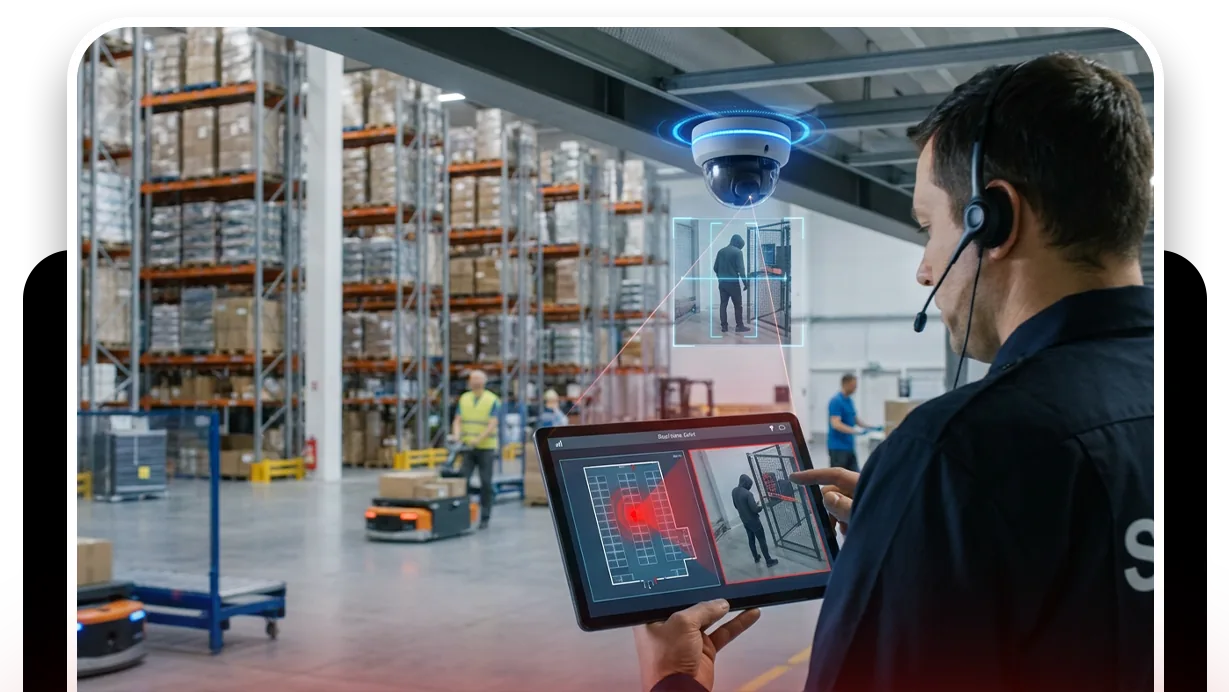
AI theft and loss prevention means detecting unauthorized presence and movement, on camera, in the areas where stock and cash are kept, while it is happening, rather than reviewing footage after the loss is counted. Camzify puts zones on stockrooms, cages, cash offices and docks, notifies in the hours each should be empty, flags entry with a snapshot, and runs a patrol round that checks the controlled areas are clear and records it.
- Zones on stock and cash areas
- Entry in set hours flagged with a snapshot
- Controlled areas checked on the round
Shrinkage is counted, not caught
Stock goes missing and the stocktake finds out. The cameras over the stockroom recorded every entry for the last month and nobody has an hour to spare per camera to find the one that mattered. Loss prevention reviews footage after the count, identifies a pattern, and is too late for that pattern by definition.
The areas that matter are few and well defined: the stockroom, the cage, the cash office, the dock. What they need is a rule about who should be there and when, and a record that the rule was checked.
“Dock door left unsecured after delivery — confirm and lock.”
Unacknowledged alerts escalate to the backup contact after the configured window.
Zones on the places stock is kept, notified when they should be empty
Zone intrusion detection draws each controlled area on its camera.
- The camera's notification window is set to the hours the area should be empty.
- A tracked person inside the cage during that window, or in the cash office at any hour it should be empty, raises an alert with the snapshot.
- Abandoned object detection catches stock staged by a fire exit or a bag left in a corridor, which is how goods leave a building that has a guard on the front door.
A patrol round checks the same areas on a schedule.
- The items are clear, closed, nothing staged, and each answer is recorded with a frame.
- When something does go missing, AI suspect search takes a description in plain language and returns matching appearances across the cameras and the time window, instead of a week of scrubbing.
- The same tracking gives occupancy per zone, which is how a store learns when the floor is too busy to watch.
Zone intrusion detection
Stockroom, cage and cash office as zones, notified in the hours they should be empty.
DetectionAbandoned object detection
Stock staged by an exit or a bag left in a corridor, raised while it is still there.
DetectionAI suspect search
A plain-language description returns matching appearances across cameras. Not facial recognition.
DetectionCross-camera journey map
Links one subject’s appearances across cameras on the site into a path.
- Stockroom empty after hoursCompliant
- Cage door lockedNot compliant
- Cash office door closedCompliant
- Nothing staged at the fire exitCompliant
A failed item is resolved as Fixed or Pending before the round can close.
What a stock-and-cash round checks
A theft-prevention sequence is the cameras on the controlled areas in order, and the checklist is the state each should be in.
- The items are empty, locked, closed, nothing staged.
- Run at closing and through the night, it produces a report per round that shows the controls held.
- Once staff know the round exists and is recorded, it changes behavior on its own.
Include the dock in the sequence. Stock leaves through it, and a dock door found up at 22:00 is a checklist failure with a snapshot rather than a discovery at the next count. The closing round itself is covered under lock-up and closing checks.
A check found Not Compliant captures a snapshot and messages the guard designated for that camera; on a manual round the operator chooses to send it, on an automated round it goes on its own. The item stays Pending until it is marked Fixed, which captures the after frame, and the report shows both.
The footage around every frame in that report stays under the camera's own retention window on cloud video surveillance, on the same account, so the still and the video it came from are never in two systems.
What it will not do
It works on presence, movement and objects against rules you define, and describes what it saw.
- The standard detections will not see concealment, and they will not identify people; they do not recognize faces or name anyone. Shoplifting detection is available as a custom build.
- It will not cover an area without a camera on it.
- It will not stop the person in the cage; it puts the snapshot in front of whoever you designate.
We do not publish shrinkage reductions or detection rates. Those depend on your store, your staff and your cameras, and the trust page explains why we will not estimate them.
Industries where this applies
Frequently asked questions
Ready to patrol your site 24/7?
Book a 15-minute demo and see a live patrol run on your own cameras.