

AI security for waste management
Waste and recycling sites are large, open and unstaffed after hours, which is when illegal dumping, vehicles through unmanned gates and theft from stockpiles happen. Camzify's virtual patrolling runs scheduled rounds on the cameras already on site, checks gates, fence lines and material stockpiles, messages the right person when a check fails, and keeps a timestamped record of every round.
- Illegal dumping after hours going undetected until the next…
- Perimeter fence lines with no continuous coverage across…
- Unauthorized vehicles entering through unmanned or unstaffed…
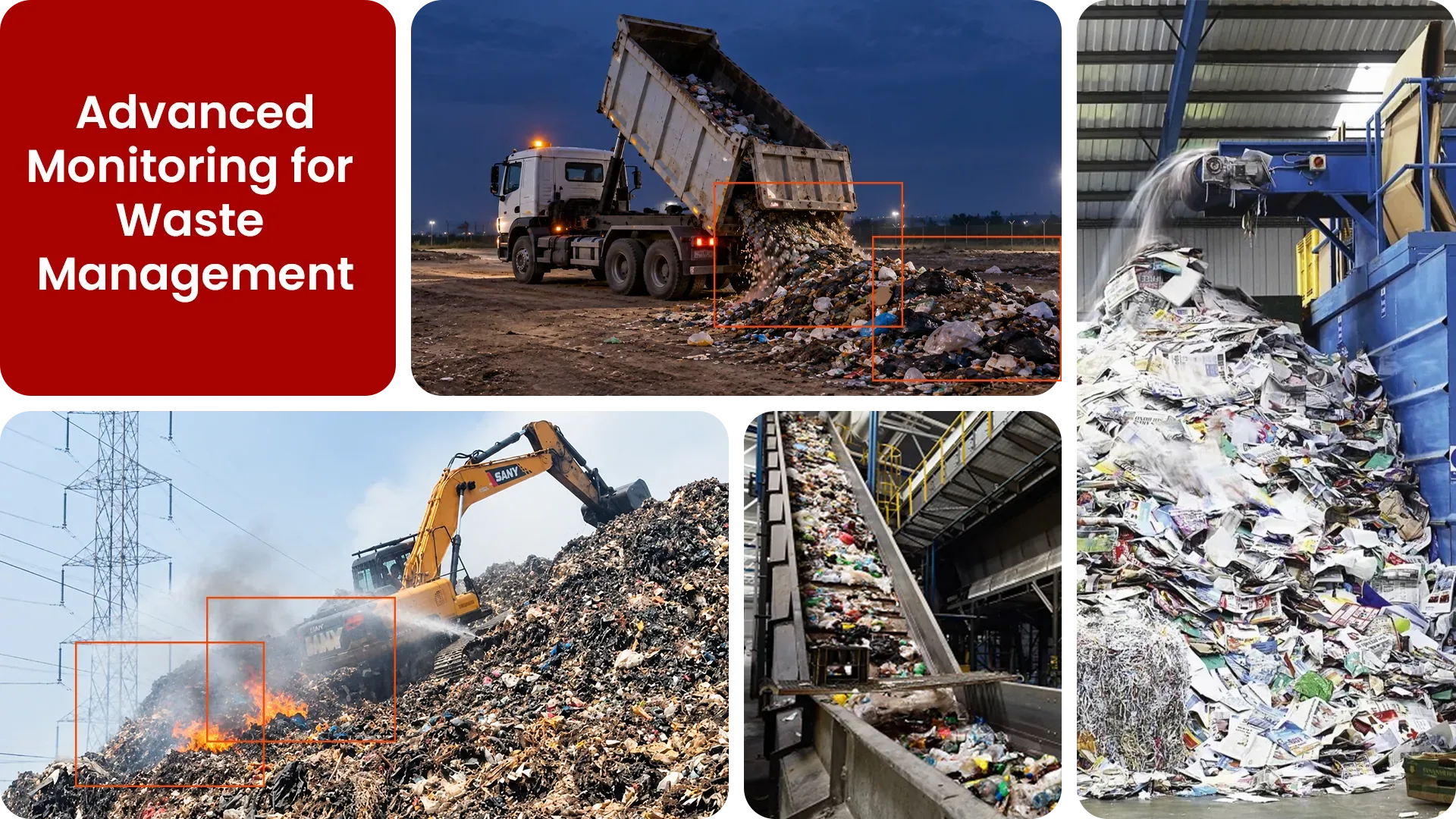
Common waste management security gaps Camzify closes:
- • Illegal dumping after hours going undetected until the next business day
- • Perimeter fence lines with no continuous coverage across large, open sites
- • Unauthorized vehicles entering through unmanned or unstaffed gates
- • Scrap and recyclable material theft from unattended stockpiles
- • Camera outages in exposed, remote yard locations going unnoticed
- • No audit trail proving perimeter checks actually happened
Why waste management needs continuous AI monitoring
Transfer stations, landfills, and recycling yards tend to sit on large open sites with long fence lines, multiple gates, and material that has real resale value sitting in the open. Most of these sites run staffed operations for a defined shift and then sit largely unattended overnight and on weekends.
A fence and a locked gate slow down illegal dumping and trespassing, but they don't stop it, and they don't tell anyone when it happens. Plain CCTV covering the yard records the event, but by the time someone reviews the footage, the dumped material is already there and the vehicle is long gone.
Virtual patrolling closes that window.
- It runs scheduled AI checks across the perimeter, gates, and yard continuously.
- It flags unauthorized vehicles or people the moment they appear.
- It produces a timestamped record that supports enforcement action.
Three questions waste management security teams ask
"Has anyone dumped illegally at the site overnight?"
Camzify answers this with Zone Intrusion Detection and automated patrol verification.
"Is the facility perimeter secure?"
Camzify answers this with Line Intrusion Detection and automated patrol verification.
"Were all camera views verified after the last truck left?"
Camzify answers this with Motion Detection and automated patrol verification.
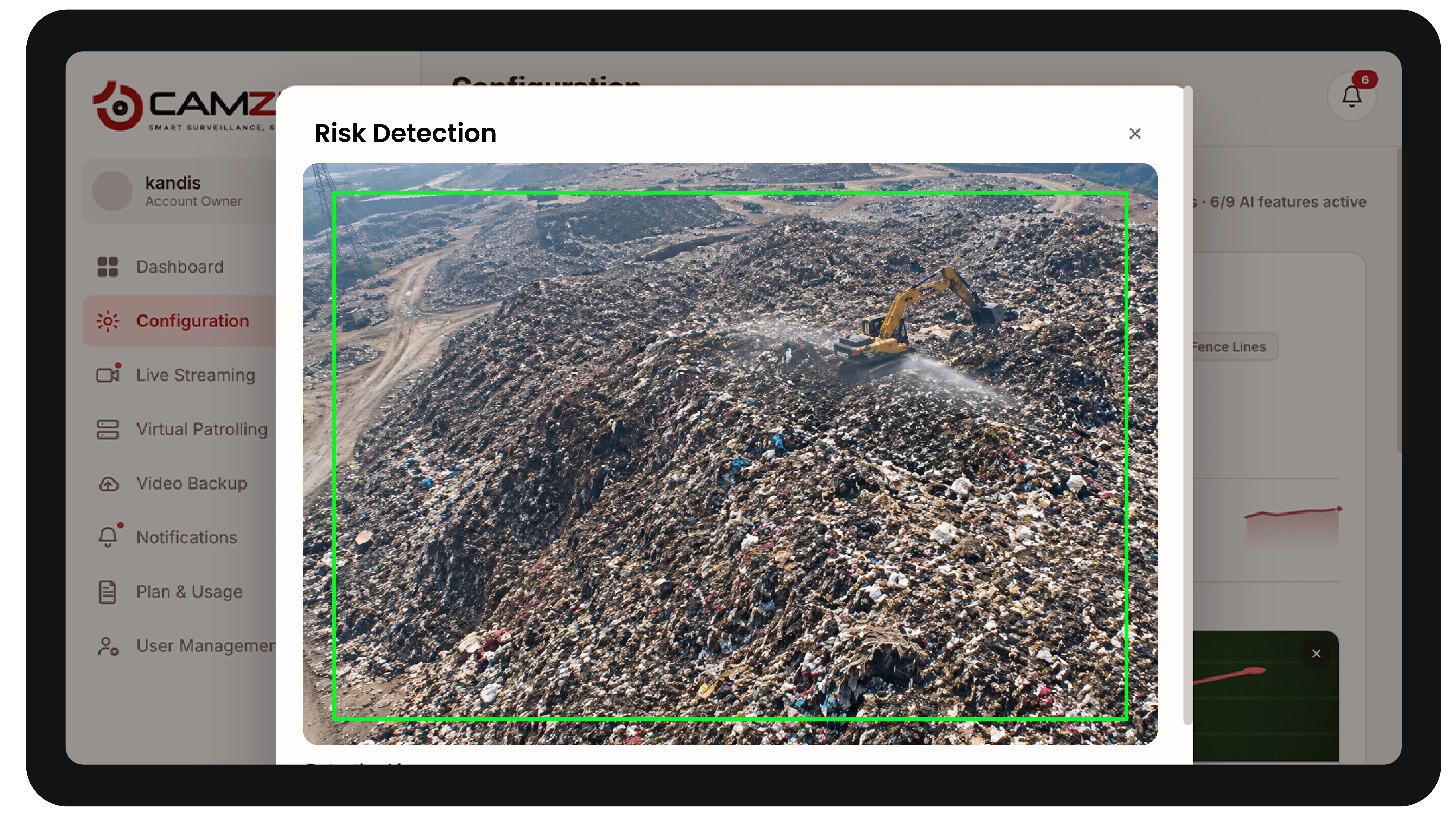
How Camzify works for waste management
Building the patrol route
A patrol sequence is set up once, ordering every camera stop, perimeter fence line, vehicle gates, transfer area, material stockpiles, into a single route that runs on a configurable schedule.
Checking each stop
At each stop, the AI checks the defined conditions for that camera using line and zone intrusion detection together with multi-object tracking.
- It checks whether the fence line is intact.
- It checks whether the yard is clear.
- It checks whether an unregistered vehicle is on site.
Routing the alert
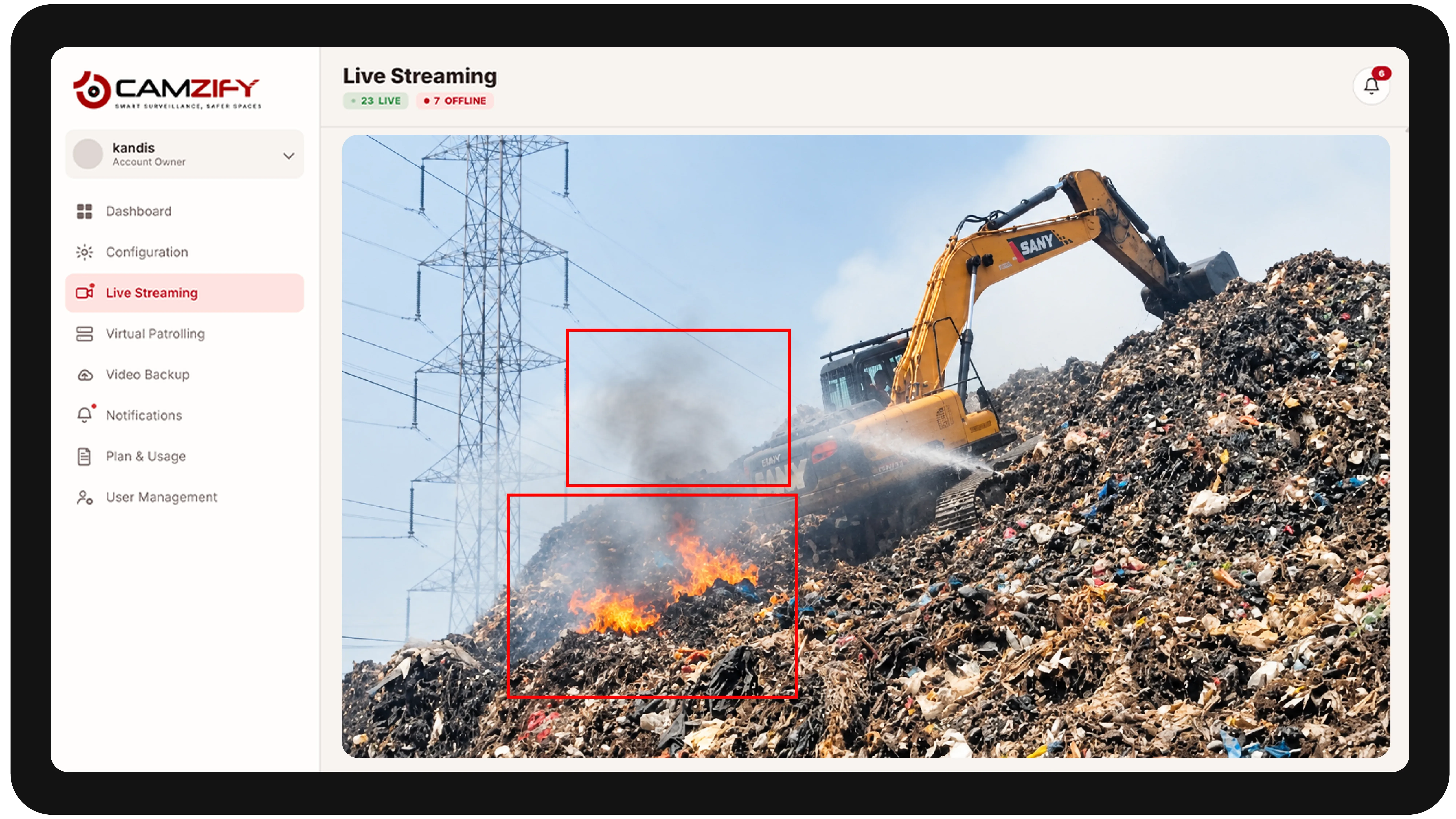
A failed check creates an actionable alert with a snapshot and timestamp, routed to the assigned site or enforcement contact, and logged alongside every other result in that round's patrol report.
What to configure for a waste management site
Most waste management deployments start with:
- • Perimeter line rules covering fence lines and vehicle gates
- • Gate zones distinguishing authorized vehicles from unregistered entry
- • Restricted zones over transfer areas and material stockpiles
- • After-hours patrol frequency, typically every 30-60 minutes overnight
- • Escalation routing to the on-call site or enforcement contact for critical alerts
Common scenarios
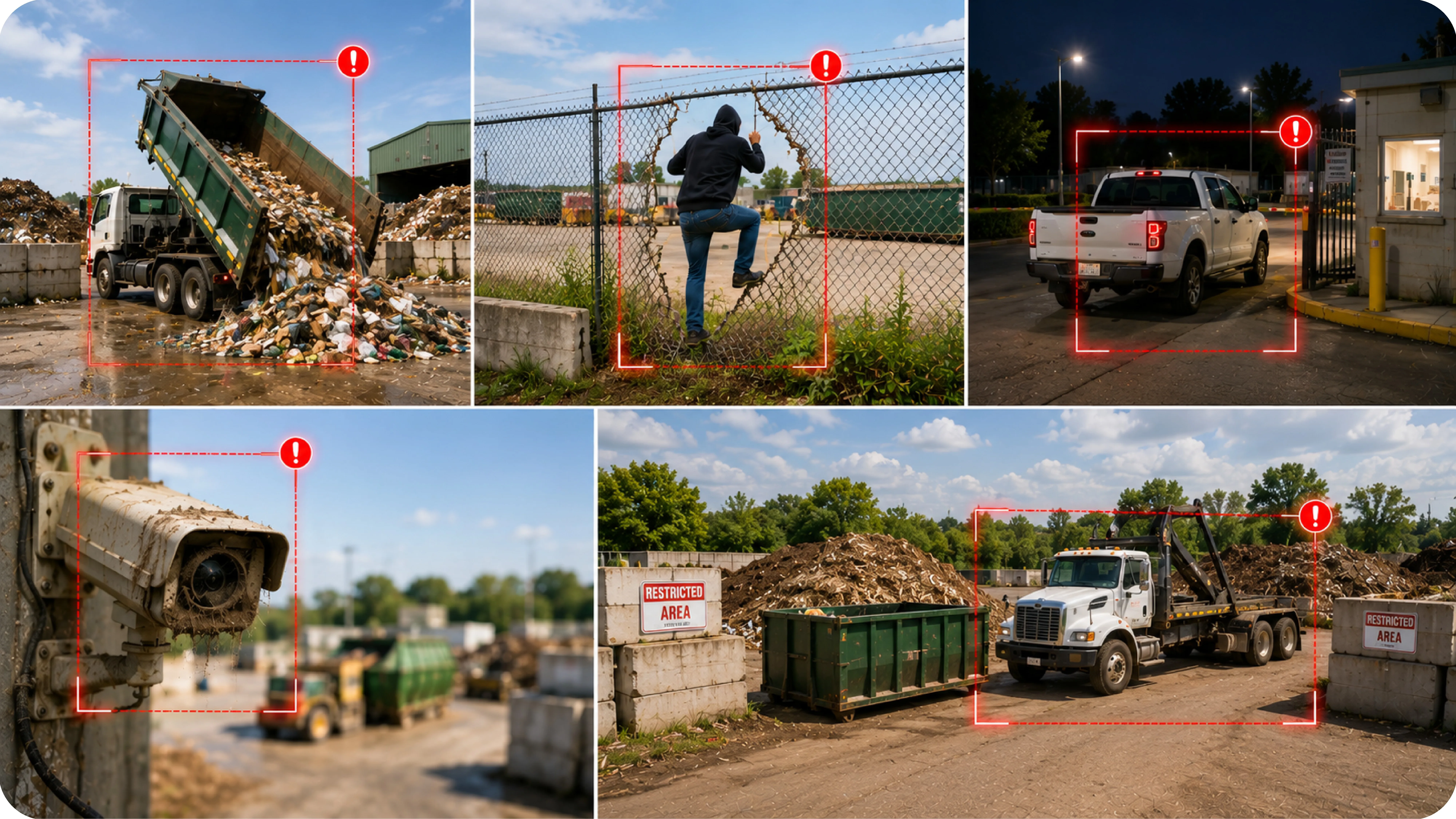
- • A vehicle dumping material at the site outside operating hours
- • A person entering through a gap in the perimeter fence
- • An unregistered vehicle idling near the gate overnight
- • A camera losing focus from dust or debris buildup
- • An unattended vehicle in a restricted transfer or stockpile area
Deployment notes
Waste management facilities face illegal dumping, trespassing, and after-hours intrusions. Camzify monitors perimeters and access points with automated patrols, providing evidence for enforcement action.
What a first deployment looks like
- Step 01
Cover the weighbridge and tipping areas
Gate, weighbridge, tipping floor and scrap storage are onboarded first — the points where unauthorized dumping and metal theft concentrate.
- Step 02
Patrol closed hours and the boundary
Rounds check that the gate is secured, the yard is clear and the fence line is unbreached during the long stretches when the site is shut.
- Step 03
Record vehicle activity
Vehicle and wrong-way rules on the approach and weighbridge lanes give a timestamped record of movements outside operating hours.
See how the numbers work for your waste management facility with the ROI calculator, or review pricing to understand the per-instance licensing model. Recording and retention for the same cameras are covered on cloud video surveillance.
AI Features used here
Related use cases
Related industries
Frequently asked questions
Ready to patrol your site 24/7?
Book a 15-minute demo and see a live patrol run on your own cameras.