

Vandalism prevention
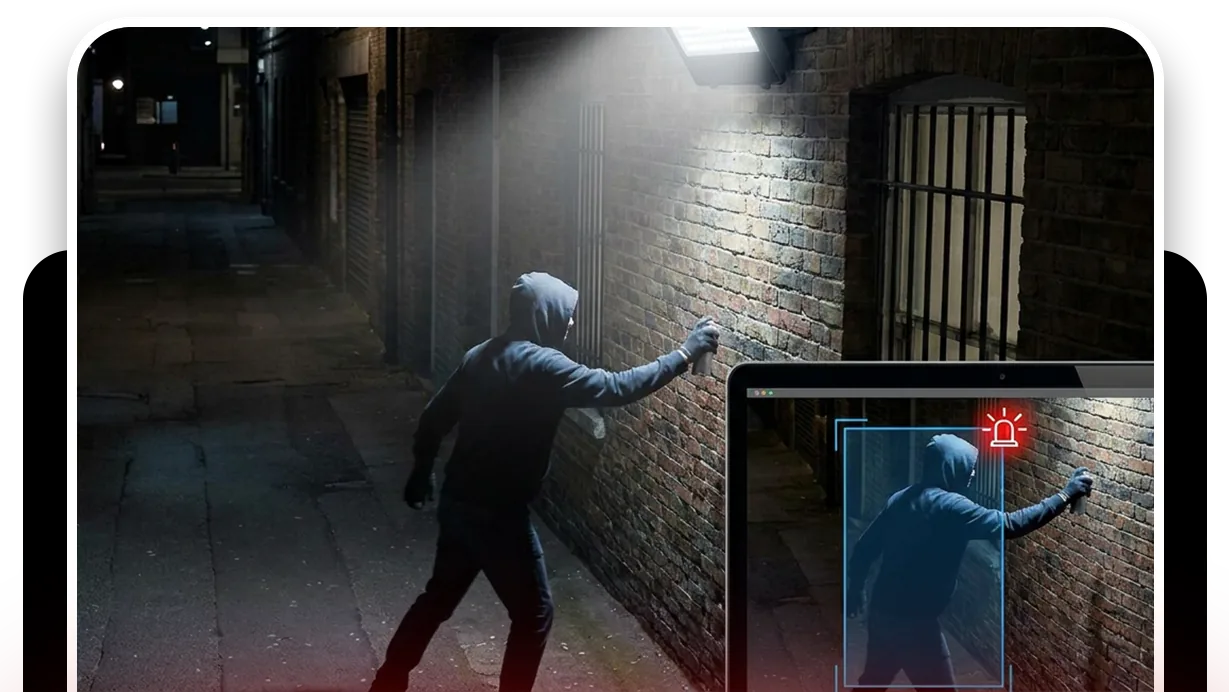
Vandalism prevention in a surveillance context means detecting a person near vulnerable assets, walls, windows, vehicles and equipment, during hours when nobody should be there, and telling someone while they are still there. The aim is intervention, not a better recording of the damage. Camzify does it with zone rules on the exterior cameras already in place and a patrol round that checks the property and records what it found.
- Presence near assets off-hours, raised live
- Zones drawn to the property line
- Exterior checked and recorded on the round
Discovered in the morning, every time
Vandalism is found, not caught. The camera on the wall recorded the whole thing in good detail, and the recording is watched the next day by someone estimating a repair. Passive recording changes nothing about the night; it only changes what can be proven afterwards, and even that requires knowing which hour to look at.
The person who does the damage stands still in a place they should not be for a minute or more first. That is the signal, and it is a simple one.
“Dock door left unsecured after delivery — confirm and lock.”
Unacknowledged alerts escalate to the backup contact after the configured window.
The person at the wall is the event
Zone intrusion detection draws the vulnerable areas on each exterior camera: the wall, the forecourt, the ground-floor windows, the equipment yard, the car park.
- The camera's notification window is set to the hours when nobody should be in them.
- A tracked person inside a zone during the window raises an alert with the snapshot; outside it, nothing is sent.
- Because it fires on a track rather than on motion, a cat, a headlight sweep or a plastic bag does not.
Automated patrol rounds can watch a scene for a short period before judging, which tells a person walking past from a person who has stopped. The round also checks the exterior on a schedule: no person present, no new damage visible, camera unobstructed. It keeps the frame, which is the timeline when damage is found.
Zone intrusion detection
Walls, windows, yards and car parks as zones, notified in the off-hours window.
DetectionLine intrusion detection
A directional line on the property boundary. Entering fires; passing along it does not.
DetectionCamera tampering detection
The camera itself is often the first target. Covered or turned, it raises an alert.
DetectionVehicle damage report
Visible damage on a vehicle in frame, for fleet and car park inspection.
- No person at the wallNot compliant
- Ground-floor windows intactCompliant
- Equipment yard clearCompliant
- No new damage visibleCompliant
A failed item is resolved as Fixed or Pending before the round can close.
What an exterior round checks
An exterior sequence is the cameras around the building in walking order, with a checklist of conditions.
- The items are nobody present, windows intact, yard clear, no new damage visible, camera unobstructed.
- Repeated through the night, it produces a report per round that shows the property was checked and found in order at each time.
- That is what the landlord and the insurer ask for after the night it was not.
Keep the items as conditions rather than events so that a passing round means something. How checklists work covers the difference.
A check found Not Compliant captures a snapshot and messages the guard designated for that camera; on a manual round the operator chooses to send it, on an automated round it goes on its own. The item stays Pending until it is marked Fixed, which captures the after frame, and the report shows both.
The footage around every frame in that report stays under the camera's own retention window on cloud video surveillance, on the same account, so the still and the video it came from are never in two systems.
What it will not do
It sees a person where one should not be, and no more than that.
- It will not see the act of painting, breaking or cutting.
- It will not identify who did it; attribute extraction describes clothing and carried objects, and that is all.
- It will not cover a wall without a camera on it.
- It will not intervene: it puts the snapshot in front of the guard designated for that camera while the person is still there.
We do not publish figures for incidents prevented. The trust page sets out what we claim and what we do not.
Industries where this applies
Frequently asked questions
Ready to patrol your site 24/7?
Book a 15-minute demo and see a live patrol run on your own cameras.