

WebRTC camera setup
WebRTC is one of the two stream formats handled by the HTTPS connection type; HLS is the other. Follow these steps to connect a camera to Camzify over WebRTC.
Configuration · Add camera
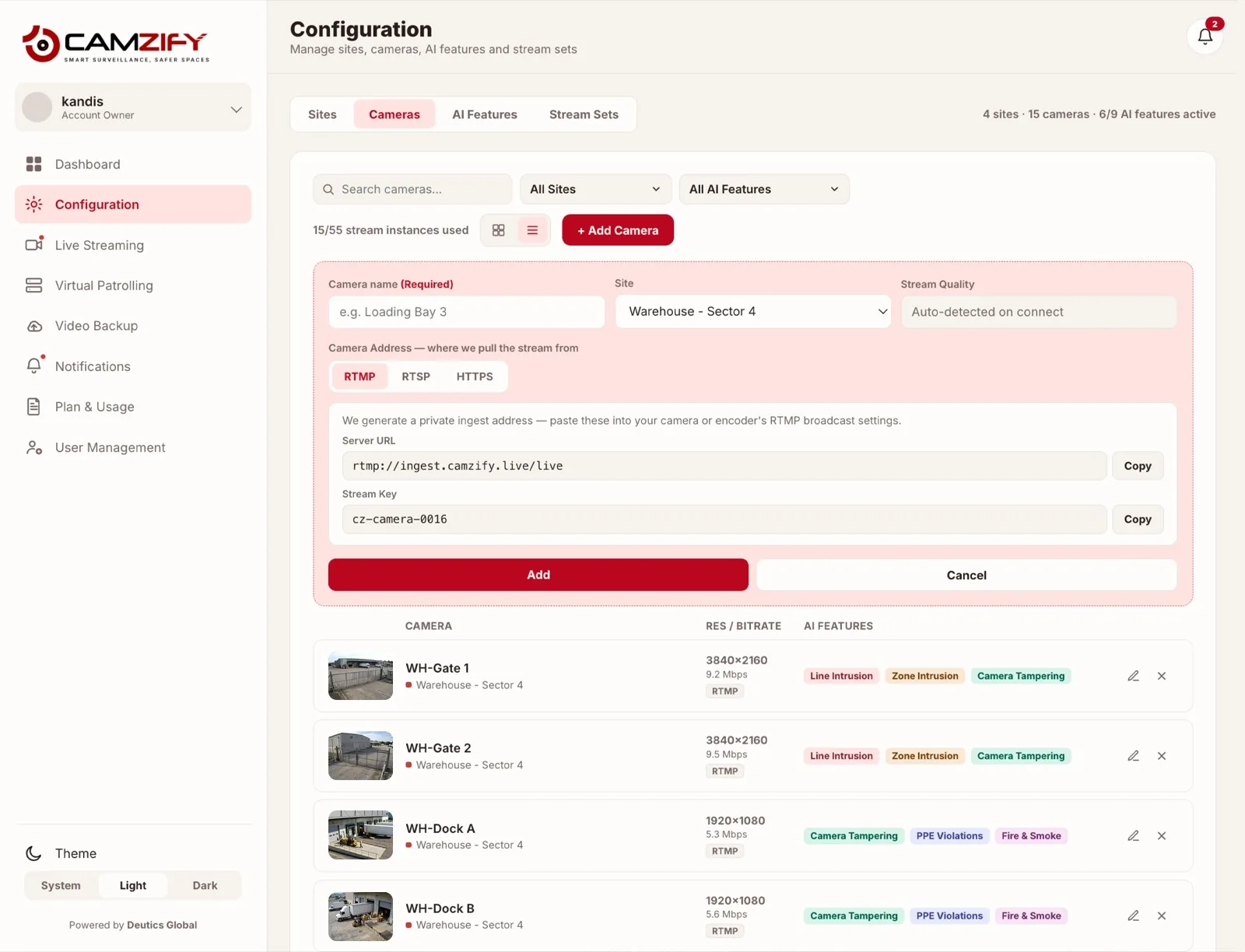
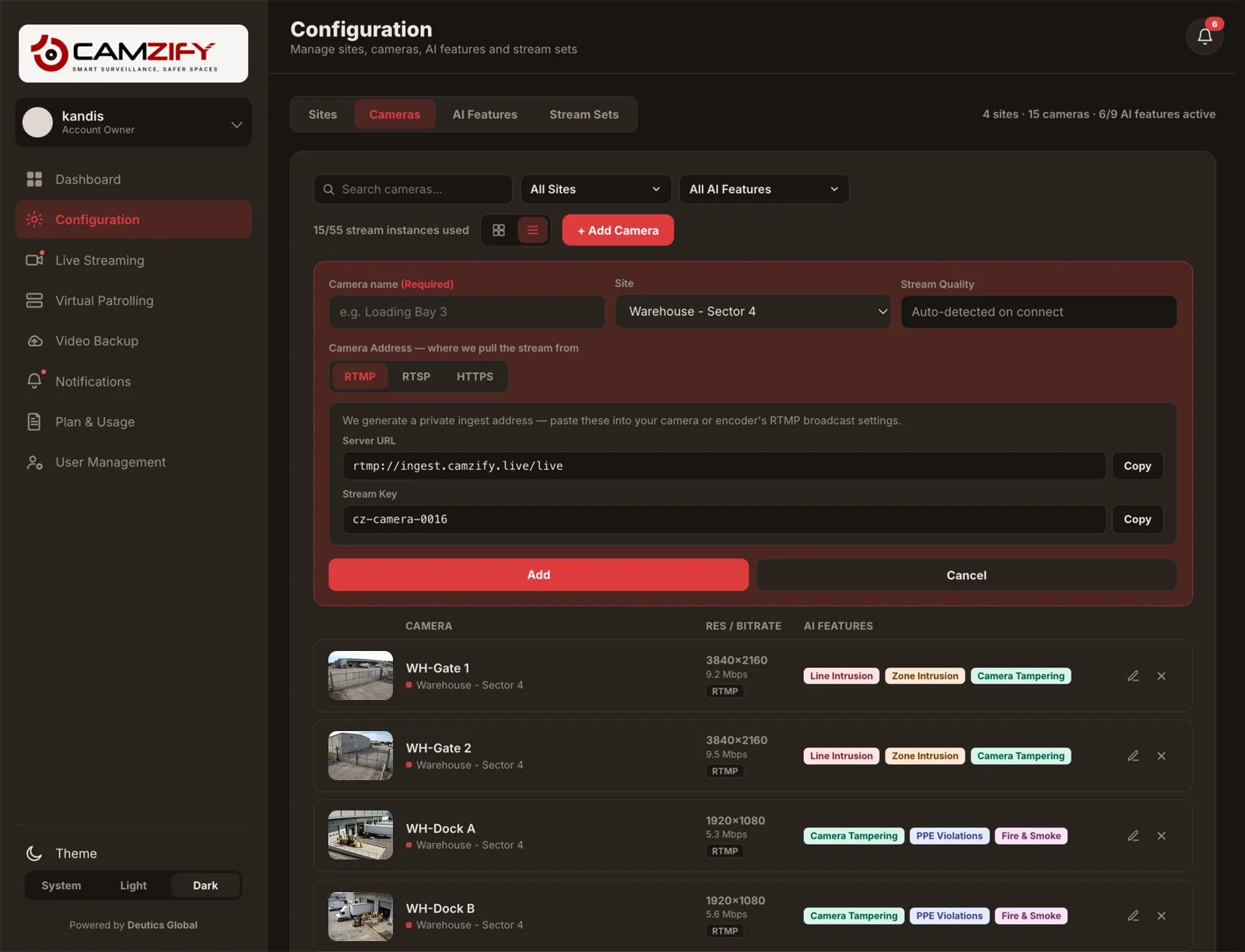
- 1
Verify WebRTC support
WebRTC connectivity uses WHEP (WebRTC-HTTP Egress Protocol) and WHIP (WebRTC-HTTP Ingress Protocol). Check if your camera or media server supports these protocols. WebRTC provides sub-second latency — ideal for real-time monitoring. - 2
Configure the WebRTC endpoint
In Camera Management → Add Camera → HTTPS, enter the WHEP/WHIP endpoint URL provided by your camera or media server. - 3
Establish the connection
Camzify initiates the WebRTC session. The live preview should appear with minimal latency. Verify the connection is stable before configuring detections. - 4
Configure detection and patrols
WebRTC streams support all AI capabilities. Add the camera to your virtual patrol sequences. The low latency makes WebRTC ideal for use cases requiring immediate alert response.
FAQ
Frequently asked questions
Under the HTTPS connection type, alongside HLS. It is the low-latency option for web-delivered streams.
Yes. WebRTC is built for near-real-time delivery, which suits watching a live event; HLS is segmented and lags. Both are fine for scheduled rounds.
No. WebRTC streams are reached over HTTPS. The Connector is for RTSP cameras on a local network.
Yes. A site can carry RTSP cameras through the Connector, an RTMP encoder and an HTTPS stream side by side; each camera picks its route when it is added.
Put these cameras on cloud recording
Camzify records RTSP, ONVIF, RTMP and HTTPS streams from the cameras you already own, with alerts and AI detections on top and nothing new on the wall.