

What is virtual patrolling?
 By Muhammad Talha · Product Manager and CTONine years building computer vision and automated surveillance systems
Virtual patrolling is a system that runs scheduled AI patrol rounds across your existing security cameras. At each camera stop, the system checks a defined list of conditions, is the door closed, is the area clear, is the perimeter intact, and flags failures to the assigned security contact. It is an alternative to physical guard patrols that provides consistent, verifiable, and auditable coverage.
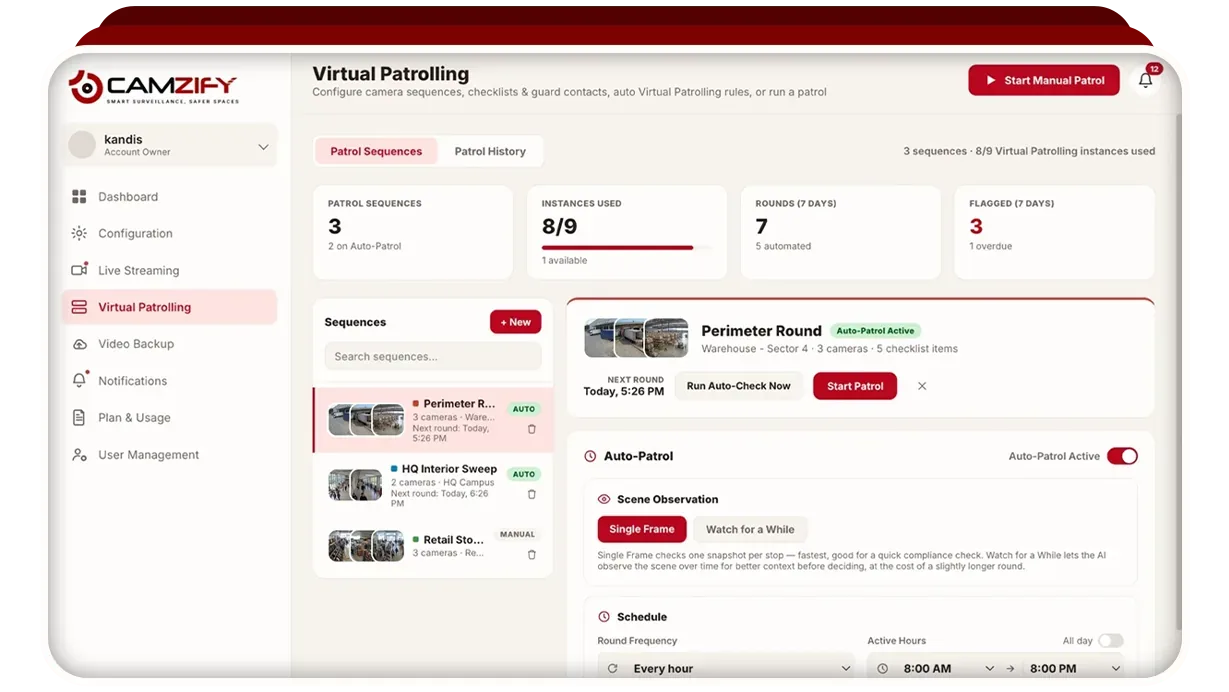
How virtual patrolling works
A virtual patrol consists of a sequence of cameras, each with a checklist of conditions to verify. The system moves through the sequence on a configurable schedule — every 15, 30, or 60 minutes. At each camera, AI detections assess the scene against the checklist. Passed checks are logged; failed checks trigger a notification to the assigned guard with the camera snapshot, timestamp, and failure details.
The entire round produces a compliance report — exportable as PDF — showing what was checked, when, and the result. This is the audit trail that insurers, regulators, and operations managers need.
What virtual patrolling is not
Virtual patrolling is not live monitoring by a human operator. It is not a video management system (VMS) that simply records and plays back footage. It is not a guard tour system that confirms physical presence at checkpoints. Virtual patrolling verifies the condition at each point using AI — it checks what the camera sees, not whether someone stood in front of it.
Who uses virtual patrolling
Virtual patrolling is used by facility managers, security directors, and property management companies who need consistent overnight coverage without the cost of 24/7 manned guarding. It is particularly effective for warehouses, retail chains, self-storage facilities, and remote sites where staffing is impractical.
Virtual patrolling vs security guards
The comparison is not binary — many facilities use both. Virtual patrolling provides the consistent, verifiable baseline; guards provide the physical response capability. The cost difference comes from hours: an overnight post is paid for every hour a person is on it, whether or not anything happens, while a scheduled round on the same cameras is priced per instance and runs as often as the schedule says. Camzify starts from $5 per camera per month; the quote for your site is measured against your own guarding hours. See the full comparison at virtual patrolling vs security guards, or model your specific scenario with the ROI calculator.