

Skip to content
NewNow in GermanAuf Deutsch
Camzify

Remote guarding cost

Portrait of Muhammad TalhaBy Muhammad Talha · Product Manager and CTONine years building computer vision and automated surveillance systems
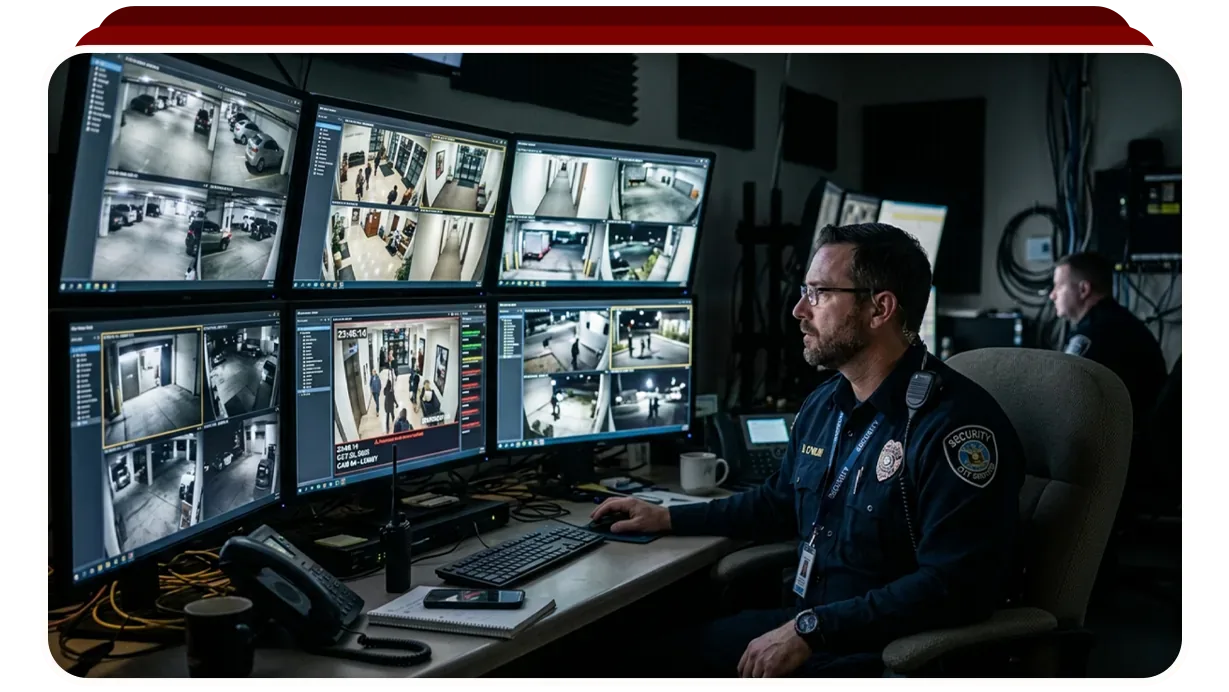
Illustration for this guide: the Camzify console and the cameras it runs on

Remote guarding cost is the price of having a human operator in a video monitoring center watch your camera feeds and respond to alerts. It sits between on-site guarding (most expensive) and fully automated virtual patrolling (least expensive). Typical remote guarding services charge per camera per month, with rates varying by hours of coverage and response protocol.
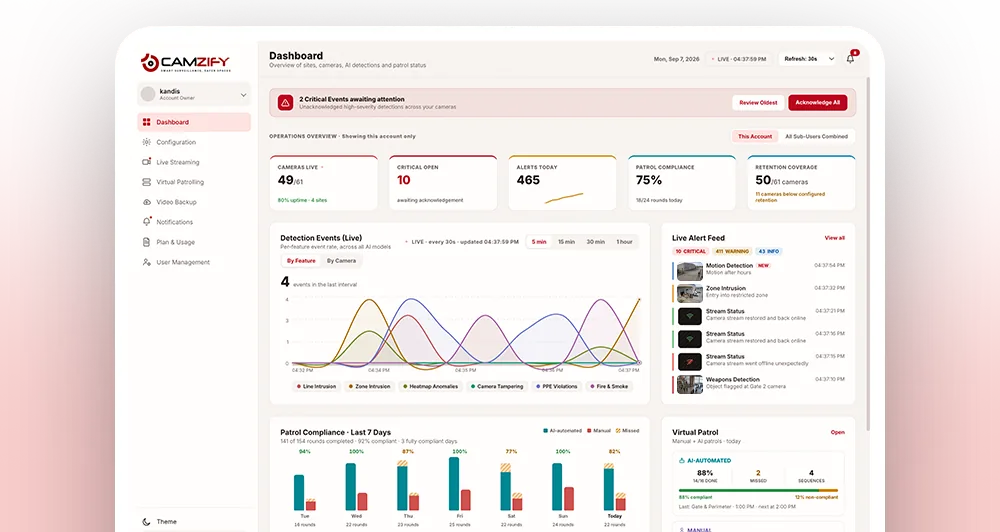
The Camzify dashboard on a laptop: cameras live, critical events open, detection events over time and the live alert feed
The console the virtual guard runs on

How remote guarding is priced

Remote guarding services are usually priced per camera per month, with the rate depending on the hours covered, the response included and whether cameras are bundled. We will not quote a market range, because the spread is wide and unsourced figures do not help you negotiate. The service includes human operators who review alerts and follow a response protocol — calling on-site contacts, dispatching guards, or contacting police.

Remote guarding vs on-site guards

Remote guarding is typically 40-60% cheaper than on-site guards because one operator monitors multiple sites. However, response time is slower — the operator can verify and call, but cannot physically intervene.

Remote guarding vs virtual patrolling

Virtual patrolling automates the monitoring function entirely — no human operator required for routine patrol rounds. This reduces cost further while increasing consistency. Camzify can alert the same on-call contacts that a remote guarding service would call, but without the per-camera monitoring fee.

When remote guarding makes sense

Remote guarding adds value when human judgment is needed for alert verification — ambiguous situations, customer interaction via intercom, or complex response protocols. For routine patrol verification (doors locked, areas clear, perimeters intact), automated virtual patrolling is more cost-effective.

Related guides

FAQ

Frequently asked questions

Typically the monitoring service, the video platform, the alarm response and sometimes the cameras. When comparing, separate the four: what you pay for people watching, what you pay for software, what you pay per dispatch, and whether hardware is bundled in.

The scheduled rounds run without an operator, so the operator cost attaches to failures rather than to watching. A monitoring company or agency can therefore cover more sites per desk, which is why the partner pages frame it as revenue rather than cost.

No. Camzify is the platform: the rounds, the detections, the notifications and the reports. The monitoring and the response are provided by you or by a security agency or monitoring company, several of which use Camzify to deliver them.

With your own: the ROI calculator has a site mode for what routine rounds cost today and an agency mode for what remote patrols would earn at your price. Camzify's cost is quoted against either.

Remote video monitoring is the same service under a different name, and it is priced the same way: per camera per month, set by the hours covered, the response included and whether cameras are bundled. Use the drivers on this page to compare quotes, and remember that a scheduled camera round from Camzify sits underneath a monitoring service rather than replacing the people in it. For the software layer itself, Camzify starts from $5 per camera per month and most cameras land between $20 and $90 per camera per month with detections and patrol rounds; the human monitoring on top is priced by whoever provides it.

Get a quote for your camera count

Camzify starts from $5 per camera per month, and most cameras land between $20 and $90. Enter your counts for a quote within one business day, or see it live first.