

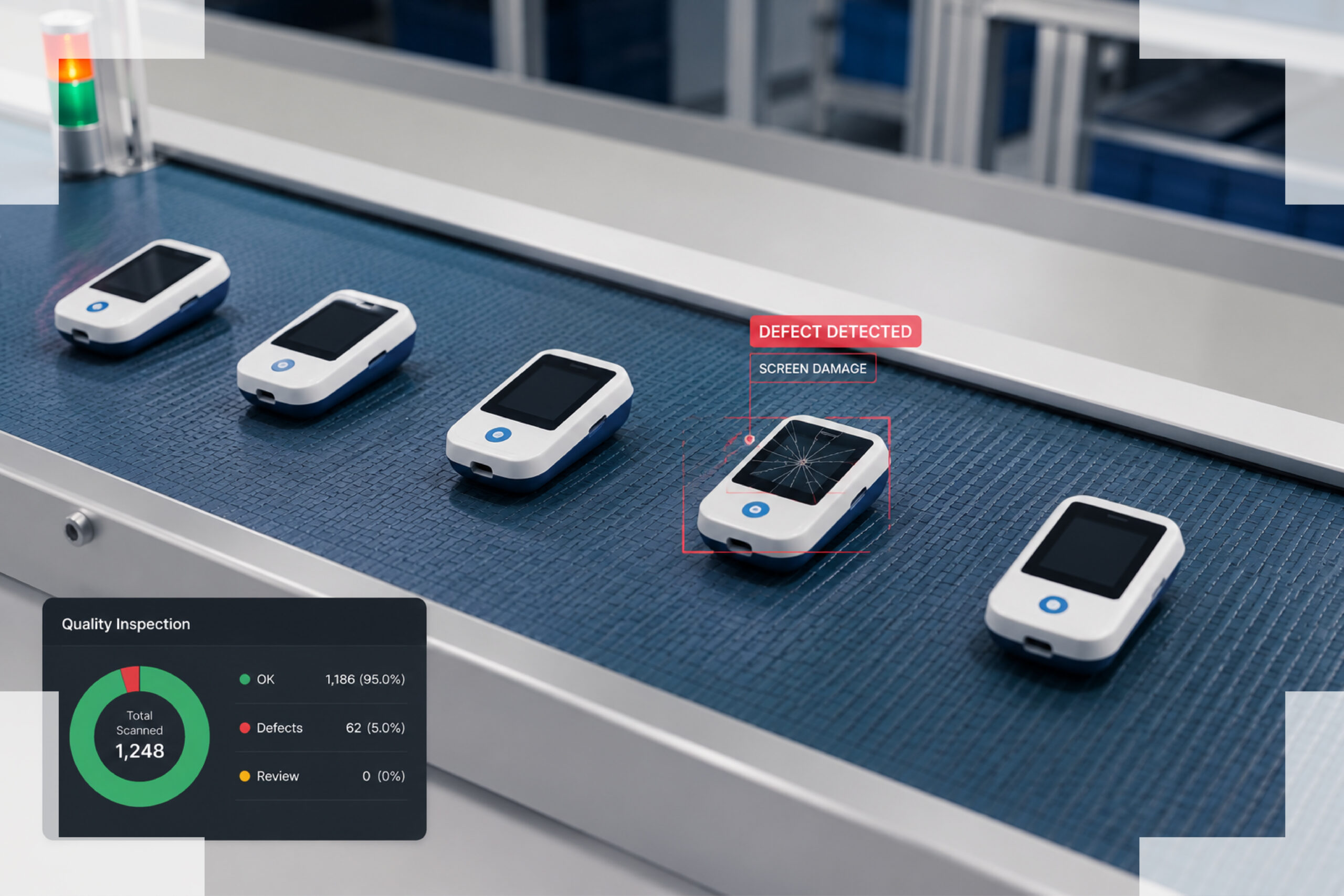
Maintaining consistent quality is critical in medical device manufacturing. Every product leaving the production line must meet strict regulatory standards and precise quality specifications before reaching healthcare professionals and patients.
Visual inspection for quality assurance serves as one of the most important stages in the manufacturing process. It helps manufacturers detect product defects, maintain compliance, and ensure that every device meets the required quality standards before packaging or shipment.
While manual inspection can perform well in smaller production environments, increasing production volumes and more complex product designs make consistency difficult to maintain. Differences in human judgment, fatigue, and repetitive inspection tasks often lead to inconsistent defect detection.
To overcome these challenges, manufacturers are increasingly adopting AI-powered visual inspection and machine vision systems that deliver faster, more accurate, and standardized quality inspections.
Visual Inspection Throughout the Manufacturing Process
Quality inspection is performed at multiple stages of medical device production to identify defects before they affect downstream operations.
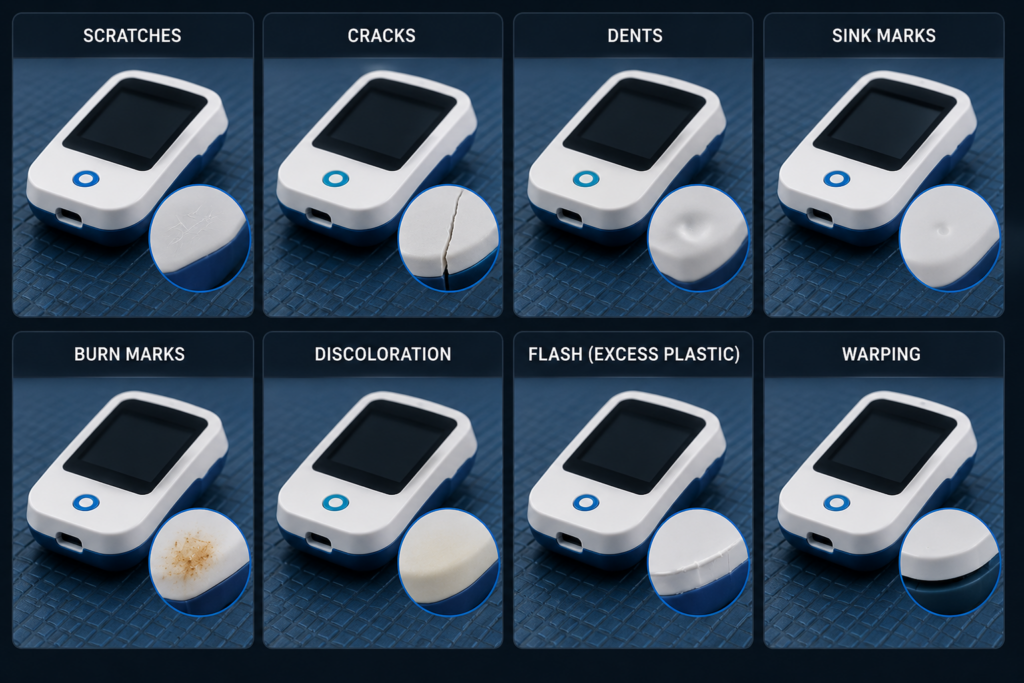
Typical defects include:
- Surface scratches
- Cracks and fractures
- Dents and deformation
- Material contamination
- Assembly and alignment errors
- Missing or damaged components
Traditional inspection depends heavily on human observation, making results susceptible to variation between operators, production shifts, and working conditions.
As production scales, maintaining inspection consistency becomes increasingly challenging, resulting in higher rejection rates, rework, and quality risks.
AI-Powered Vision Systems for Medical Device Inspection
To improve inspection accuracy, manufacturers implement AI vision inspection systems capable of evaluating every product using standardized imaging and intelligent analysis.
Unlike manual inspection, every device is inspected using identical criteria, lighting conditions, and automated decision rules.
Using computer vision for manufacturing, these systems can:
- Detect surface defects automatically
- Verify product dimensions and alignment
- Identify assembly inconsistencies
- Perform high-speed quality inspections
- Deliver consistent inspection results across every production line
By eliminating subjective human judgment, AI-powered inspection creates a reliable and repeatable quality assurance process.
Computer Vision for Automated Defect Detection
Modern Computer Vision technology enables manufacturers to detect defects that may be difficult for the human eye to identify consistently.
Instead of focusing only on visible damage, AI algorithms analyze:
- Surface texture variations
- Fine cracks and scratches
- Shape deviations
- Component positioning
- Edge quality
- Structural irregularities
This approach is particularly valuable for precision medical devices such as:
- Glucose meters
- Insulin pens
- Insulin pumps
- Diagnostic equipment
- Wearable medical devices
Even minor imperfections can impact product quality, making automated defect detection essential for maintaining manufacturing standards.
Benefits of AI Visual Inspection
Implementing AI-powered quality inspection provides measurable improvements throughout the manufacturing process.
Key benefits include:
- Higher inspection accuracy
- Faster defect detection
- Reduced manual inspection effort
- Consistent quality across all production shifts
- Lower product rejection and rework costs
- Improved production efficiency
- Real-time inspection analytics
- Better traceability and quality reporting
- Reduced manufacturing waste
- Increased customer confidence and regulatory compliance
With access to inspection data and defect trends, manufacturers can identify recurring quality issues early and optimize production processes before defects become costly.
Conclusion
Reliable inspection is essential for producing safe and high-quality medical devices.
Although manual inspection continues to play an important role, it becomes increasingly difficult to maintain consistency as manufacturing operations expand.
By combining AI visual inspection, computer vision technology, and machine vision quality inspection, manufacturers can automate defect detection, improve inspection accuracy, and ensure consistent product quality at every stage of production.
As production demands continue to grow, AI-powered quality control systems help manufacturers achieve higher efficiency, reduce operational costs, and maintain the strict quality standards required in the medical device industry.